
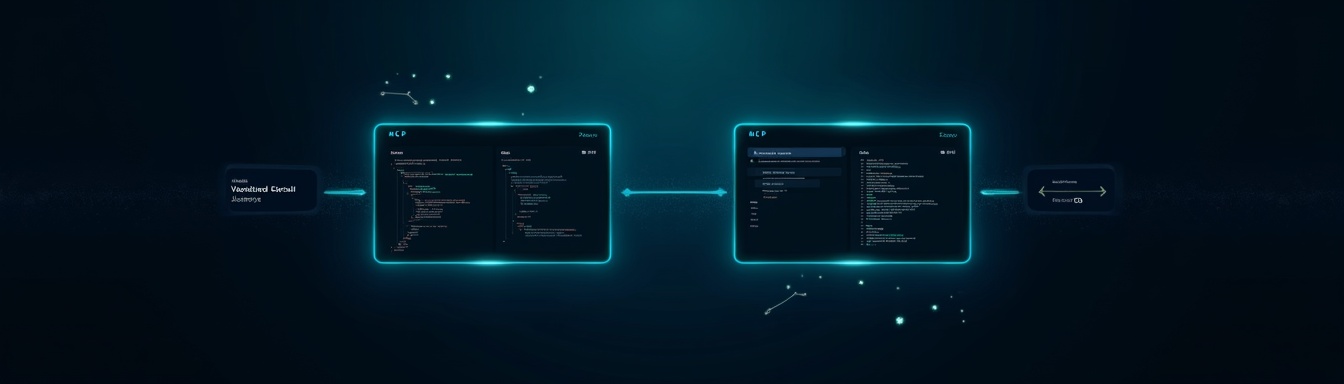
Anthropic shipped Claude Code 2.1.76 today, and buried in what looks like a routine point release is something that will materially change how engineering teams build AI-augmented workflows: full MCP elicitation support, with new `Elicitation` and `ElicitationResult` hooks that let tools request structured input from users mid-task. Pair that with the new `-n` / `--name` CLI flag for display naming, and you have a release that's less about polish and more about Claude Code growing up as an infrastructure-grade tool.
Here's what changed, why it matters, and what your team should do before end of quarter.
What Actually Shipped
The headline feature is MCP elicitation — a mechanism inside the Model Context Protocol that allows an MCP server to pause execution and request specific input from the human in the loop. The new `Elicitation` and `ElicitationResult` hooks are the interface for that interaction.
In plain terms: your AI coding agent is no longer limited to either proceeding with assumptions or halting entirely when it needs information. It can now ask a structured, typed question — and get a structured, typed answer — before continuing. That's a fundamentally different interaction model.
The `-n` / `--name
Why MCP Elicitation Changes Agent Workflows
Most AI coding agents today operate on a spectrum: either they run fully autonomously and occasionally produce confident nonsense, or they interrupt you constantly asking for clarification and defeat the productivity gains entirely. Neither is acceptable at scale. Elicitation solves the interruption model. Instead of a free-form "what should I do here?" message that forces the developer to context-switch and interpret, an MCP server using the new hooks can surface a structured prompt — a dropdown, a confirmation, a typed input field — at exactly the right moment in a task. The agent knows what it needs. The developer provides exactly that. Execution continues. This is how mature software systems have always handled human-in-the-loop checkpoints. It's what approval workflows in CI/CD pipelines look like. It's what database migration confirmations look like. Claude Code is now capable of operating at that same level of precision, rather than relying on the fuzzy back-and-forth of chat. For engineering teams running Claude Code as part of automated pipelines — using it to triage PRs, scaffold services, or handle routine refactors — this closes a critical gap. The agent can now get the one piece of context it needs without requiring a full human intervention or making a costly assumption.
The companies that figure out how to get the most out of AI — how to structure workflows around it — are going to have a dramatic competitive advantage.
— Dario Amodei, CEO at Anthropic
This is exactly what elicitation enables: structured workflows around AI, not AI running loose.
The Competitive Context: Where This Puts Claude Code
Let's be direct about the landscape in early 2026.
| Tool | Agent Mode | MCP Support | Elicitation Hooks | Multi-Instance Naming |
|---|---|---|---|---|
| Claude Code 2.1.76 | ✅ Full | ✅ Native | ✅ New in 2.1.76 | ✅ New in 2.1.76 |
| GitHub Copilot Agent | ✅ Full | ❌ Proprietary | ❌ | ✅ Via workspace |
| Cursor Agent | ✅ Full | ⚠️ Partial | ❌ | ⚠️ Limited |
| Windsurf (Codeium) | ✅ Full | ⚠️ Partial | ❌ | ❌ |
| Devin (Cognition) | ✅ Full | ❌ | ❌ | ✅ Via tasks |
MCP as a protocol has been gaining serious traction as the connective tissue between AI agents and real-world tools and data sources. Anthropic designed it and is advancing it most aggressively. That matters because interoperability compounds — every new MCP server your team builds or adopts becomes more powerful as the agent layer gets more capable of orchestrating it. GitHub Copilot has distribution advantages that can't be ignored — it sits inside VS Code and the GitHub ecosystem for tens of millions of developers. But Microsoft is working with a proprietary integration model that doesn't give teams the same flexibility. You can extend Copilot, but you can't wire it into arbitrary tooling the way MCP allows. Cursor remains the favorite IDE experience for individual developer productivity, and it's not going away. But Cursor is optimized for the single-developer workflow. Claude Code is increasingly optimized for the team-level and pipeline-level workflow. They're solving different problems, and smart teams are running both.
The Stability Caveat You Need to Know
This is where I'll be direct, because credibility matters more than cheerleading: 2.1.76 shipped with known bugs. Active reports include voice interruption handling failures, image data transmission issues, and TUI crashes under certain conditions. These are real stability concerns, not theoretical edge cases. If your team is running Claude Code in interactive development mode — a developer at a keyboard, doing exploratory work — the risk profile is manageable. Bugs are annoying but recoverable. You update, you file a ticket, you move on. If your team is running Claude Code in automated pipelines with minimal human supervision, wait. The elicitation hooks are compelling, but deploying a release with confirmed TUI instability into production automation is exactly the kind of decision that creates 2am incidents and erodes trust in the tooling. Anthropic's release cadence on Claude Code has been aggressive. Point releases follow quickly. Watch for 2.1.77 or 2.1.78 before committing elicitation-dependent workflows to your critical path.
What Engineering Leaders Should Do Now
This release is a forcing function for teams that have been treating Claude Code as a nice-to-have rather than infrastructure. Here's the action sequence:
Audit your current MCP server inventory. If you've built or adopted MCP servers for your toolchain, identify which ones would benefit from elicitation. Anywhere a server currently has to assume a value or halt execution is a candidate.
Prototype the Elicitation hooks in a non-production workflow. Spin up a test scenario — a code generation task that requires a runtime decision about naming conventions, target environment, or schema options. Map what a structured elicitation interaction looks like in your context before you need it to work reliably.
Use `-n` / `--name` immediately. This one has zero downside risk. If anyone on your team is running multiple Claude Code sessions, start naming them today. Operational clarity is free.
Hold automated pipeline adoption until 2.1.78+. The stability reports are too fresh to ignore. Schedule a re-evaluation checkpoint in two weeks.
Brief your senior engineers on MCP elicitation as a design pattern. This isn't just a Claude feature — it's a pattern for how human-in-the-loop AI workflows should be architected. Engineers who understand it now will design better agent systems six months from now.
The Bigger Picture: AI-Native Engineering Is a Systems Problem
The teams winning with AI in 2026 aren't the ones where every developer individually discovered a productivity trick. They're the ones where engineering leadership made architectural decisions about how AI integrates into the development system — the pipelines, the tooling, the review processes, the deployment gates. MCP elicitation is an architectural primitive. It's the difference between an AI agent that runs and prays versus an AI agent that's a first-class participant in a structured workflow. That matters whether your team has 5 engineers or 500. The individual team running a feature vertical might be a 4-person unit that once would have required 20. But the engineering organization isn't shrinking — it's expanding onto more fronts, shipping more products, operating more services simultaneously. The leverage is there. The question is whether you've built the infrastructure to capture it. Claude Code 2.1.76, stability caveats and all, is a meaningful step toward agents that are trustworthy enough to build that infrastructure on. The elicitation model is right. The implementation will mature. Get your teams fluent in the pattern now.
Finding engineers who actually know how to work at this level — who understand MCP, who can design agent-integrated workflows, who are AI-native rather than AI-curious — is where the real bottleneck is. That's the hiring problem Nextdev exists to solve.
Get matched to AI-native roles
Join Nextdev's network of AI-native engineers and get matched to paid projects and roles.
Read More Blog Posts
AI Tools Weekly: Claude Code Gets 1M Context — Free
TL;DR: Claude Code shipped two meaningful releases this week. v2.1.75 unlocked a 1M token context window for Opus 4.6 at no long-context premium on Max, Team, a
Micro1 Review: Worth It for Hiring AI Engineers?
Micro1 vets engineers — but on what? We break down Micro1's assessment, sourcing, and engineer pool, and explain what AI-native engineering hires actually need in 2026.