
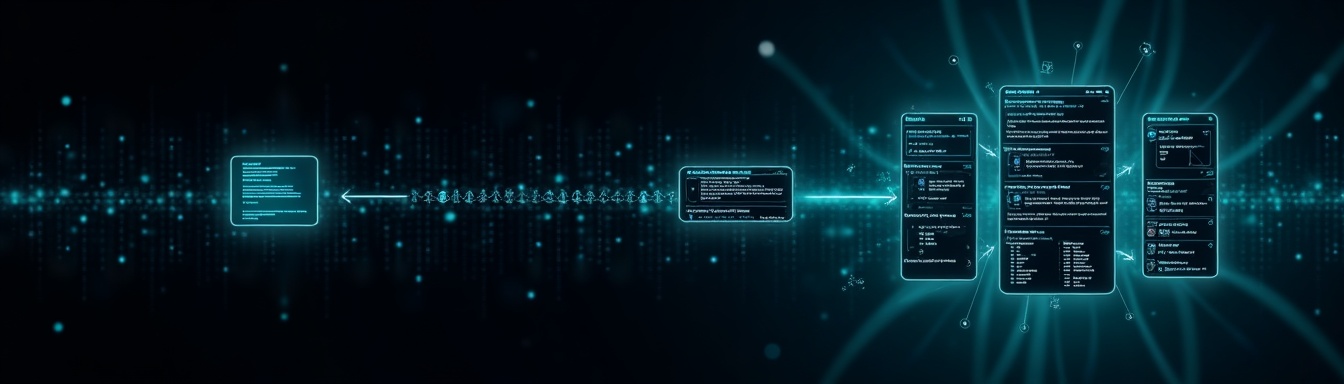
The first wave of AI in engineering was simple: hand every developer a copilot, watch productivity numbers tick up, declare victory. GitHub Copilot, Cursor, Tabnine — individual tools for individual contributors. The org chart stayed the same. The stand-ups stayed the same. The sprint rituals stayed the same. And honestly? That worked well enough to get most teams off zero. But "well enough" is not where this ends.
The second wave is already underway, and it looks nothing like the first. Delivery firms, platform vendors, and forward-thinking engineering orgs are ripping out the copilot-per-seat model and replacing it with something structurally different: persistent AI pods embedded directly inside product teams, wired into source control, CI/CD, and issue tracking, running continuously rather than waiting for a developer to open an IDE. The unit of productivity is no longer the individual engineer with an AI assistant. It is the team with an AI collaborator that never clocks out.
If you are still thinking about AI tooling as a line item in your developer tooling budget, you are already behind the engineering leaders who are thinking about it as a structural redesign of how software gets built.
What an AI Pod Actually Looks Like
Forget the vendor marketing. At its core, an AI pod is a small, high-leverage squad where human engineers are paired with one or two always-on coding agents that own a defined slice of the codebase and the delivery pipeline. Think 2-4 engineers plus persistent agents integrated into your repo, your CI, and your ticketing system. Relevance Lab defines these as elastic, AI-augmented delivery squads where every function — product, development, testing, DevOps, architecture — is paired with GenAI automation, "explicitly aiming to increase throughput and quality without proportionally increasing human headcount." That last phrase is the one your finance team will care about, and the one your org design should be built around. Globant took this further with their "AI Pods as a Service" model, where agentic workflows run on their Enterprise AI platform as platform-orchestrated, human-supervised systems. Critically, they changed the billing model: out with time-and-materials headcount billing, in with metered, token-based team-level subscriptions. That is not a pricing gimmick. It signals that the fundamental unit of engineering delivery is shifting from person-hours to outcome-and-compute, and the commercial models are catching up to the technical reality. Ideas2IT calls these plug-and-play AI pods — modular, embedded units that slot into existing product squads. Their argument is pointed: pod-based AI teams are becoming "the default way for the smartest AI teams to scale AI development rather than treating AI as a separate, centralized service." That last clause matters. AI as a centralized service — a shared platform team that other squads call into — is the transitional model. Embedded pods are the destination.
The Before/After Is More Dramatic Than You Think
Here is what the structural shift actually looks like at team level:
| Dimension | Copilot Era (2024-2025) | AI Pod Era (2026+) |
|---|---|---|
| Team size (feature squad) | 6-10 engineers | 2-4 engineers + 1-2 agents |
| AI integration | Per-seat IDE tools | Wired into repo, CI, issue tracker |
| AI availability | On-demand, human-initiated | Persistent, event-driven |
| Who reviews AI output | The engineer who prompted it | Senior engineers reviewing PRs at scale |
| Cost model | Per-seat SaaS licenses | Seat licenses + orchestrator + guardrail infra |
| Junior engineer role | Writes boilerplate, fixes bugs | Diminished; replaced by supervised agents |
| Senior engineer role | Writes features, reviews PRs | Architects agent boundaries, supervises pods |
The 30-40% productivity gains reported on routine coding tasks in 2026 — CRUD operations, unit tests, boilerplate — represent the floor, not the ceiling, of what persistent agents can handle. When those agents run continuously against your ticket queue rather than waiting for a developer to open a chat window, you are not getting 30-40% more output from each developer. You are getting throughput that scales closer to the complexity of the work than the size of the headcount.
The Role That's Actually Emerging
FPT Software has been explicit about what "AI-native software engineer" means in practice: developers who orchestrate AI tools and agents so that AI autonomously performs much of the work, with humans acting as conductors focusing on architecture, domain judgment, and higher-risk decisions. "Conductor" is the right frame. The engineers who thrive in AI pod structures are not the ones writing the most code. They are the ones who can:
Decompose work into agent-executable units with clear boundaries and acceptance criteria
Define modular architectures that constrain what agents can safely touch
Review AI-generated PRs at scale without rubber-stamping them
Recognize when an agent is operating outside its competency and pull it back
This is a different skill profile than what most hiring pipelines screen for today. Leetcode fluency is table stakes and increasingly irrelevant as a differentiator. What matters is architectural judgment, system thinking, and the ability to supervise and course-correct AI collaborators under time pressure. These are senior and staff-level skills, and they are becoming the baseline for effective engineering in a pod structure. The implication for hiring is direct: stop planning to hire six mid-level engineers to grow your squad. Plan to hire two exceptional ones who can run a pod.
The Infrastructure Layer Nobody Talks About
Every conversation about AI pods focuses on the squads. Almost none focus on what has to be true at the platform level for pods to work safely. This is the gap that will bite teams who rush implementation. Persistent Systems' 3C framework — Core, Context, Coordination — calls out explicitly what this governed infrastructure layer needs to own: connecting data and workflows, governing models and agents, enforcing identity and access, and delivering observability for performance and cost. This is not an enhancement to your existing DevOps function. It is a new team with a new charter. In practice, you need someone owning:
- •Model selection and version governance — which models run in which contexts, and when they get upgraded or swapped
- •Repo access policies — which services agents can read, which they can write, and what requires human approval before merge
- •Guardrail infrastructure — prompt guardrails, output validation, and hard stops for high-risk operations like schema migrations or cross-service contract changes
- •Observability and cost attribution — token spend per squad, error rates on agent-generated PRs, latency on CI agent loops
- •Incident response — what happens when an agent introduces a regression at 2am, who owns the rollback, and how you prevent recurrence
Teams treating this as an afterthought will hit a compressible wall somewhere around the six-month mark: agents accumulating technical debt faster than humans can review it, cost overruns from unmonitored token burn, or a production incident caused by an agent operating outside its intended boundaries. The teams getting this right are building the platform function first, then rolling pods out incrementally into constrained zones of the codebase.
The Real Competitive Advantage Is Not the Model
Most analysis of AI pods focuses on throughput: more features, faster cycle times, smaller headcount. These are real and meaningful. But there is a second-order advantage that gets almost no coverage, and it is actually more durable. When you encode your engineering best practices, coding standards, and domain-specific patterns into the agent stack itself — into your prompts, your guardrails, your evaluation harnesses — you are not just automating tasks. You are codifying institutional knowledge that new engineers inherit automatically.
This is what Globant and Relevance Lab are selling when they talk about AI pods as platforms rather than tools. The competitive edge stops being "we have access to GPT-5" — every company has access to GPT-5 — and starts being "we have six months of accumulated workflows, domain-specific context, and enforced standards baked into our agent layer that our competitors don't have." That is a proprietary engineering capability. It compounds over time. And it makes onboarding dramatically faster, because a new engineer inheriting your pod environment inherits your best practices automatically, not through months of code review apprenticeship.
This is the org design argument for moving fast on AI pods. Not just the throughput gains. The institutional knowledge moat.
A Framework for Making the Transition
If you are an engineering leader looking at this and asking "where do I actually start," here is a structured path:
Phase 1: Build the Platform First (Months 1-2)
Stand up your AI platform/enablement function before you change any squad structures. Define access policies, select your orchestration layer (LangGraph, AutoGen, or a managed option like Globant's Enterprise AI platform), and establish observability. This team owns agent governance across every squad.
Phase 2: Run a Constrained Pilot (Months 2-4)
Pick one squad, one well-bounded service or module, and deploy persistent agents owning a defined scope: test generation, dependency updates, or a specific category of bug fixes. Measure PR review throughput, defect rates on agent commits, and senior engineer time spent on supervision versus original development.
Phase 3: Redesign Hiring Around the Results (Months 4-6)
Use the pilot data to recalibrate your hiring plan. If two senior engineers running a pod are delivering what four mid-level engineers delivered before, revise your headcount model accordingly. Start screening explicitly for AI collaboration skills: can candidates decompose work for agents, review AI-generated code critically, and define safe agent boundaries?
Phase 4: Scale Pods, Expand Ambition (Months 6+)
Individual squads get smaller and more capable. But here is the critical strategic move: do not bank the headcount savings and stop. Redeploy that capacity into new product bets you could not have staffed before. Each pod that reaches steady state frees up engineering capacity for new fronts. The teams that win are not the ones that got smaller; they are the ones that got smaller per product and launched more products.
The Window Is Shorter Than You Think
The infrastructure work takes time. The hiring shift takes longer. The organizational change management takes longest of all. Engineering leaders who start this transition in 2026 will have a 12-18 month head start on teams that wait for the approach to become industry-standard consensus. AI pods are not a future state. They are already the operating model at the firms building the next generation of software delivery. The question for every VP of Engineering and CTO reading this is not whether to adopt this model. It is whether you want to be one of the teams that shapes how it works or one of the teams that scrambles to catch up to it. The copilot era gave every developer a better IDE. The pod era gives every product team a better team. That is a fundamentally different kind of leverage, and the leaders who act on it now will look very smart in 18 months.
Get matched to AI-native roles
Join Nextdev's network of AI-native engineers and get matched to paid projects and roles.
Read More Blog Posts
AI Coding Tools Are Now Platform Spend — Act Like It
The most important budget conversation engineering leaders will have this year isn't about headcount. It's about the $50–$70 per engineer per month quietly accu
Scalable Path Review: Is It Worth It in 2026?
Verdict: Scalable Path is a solid nearshore staffing solution for non-technical founders who want curated developer shortlists without managing an open marketpl